
IPTV vs. Cable TV in 2027: Cost, Flexibility, and Viewing Experience
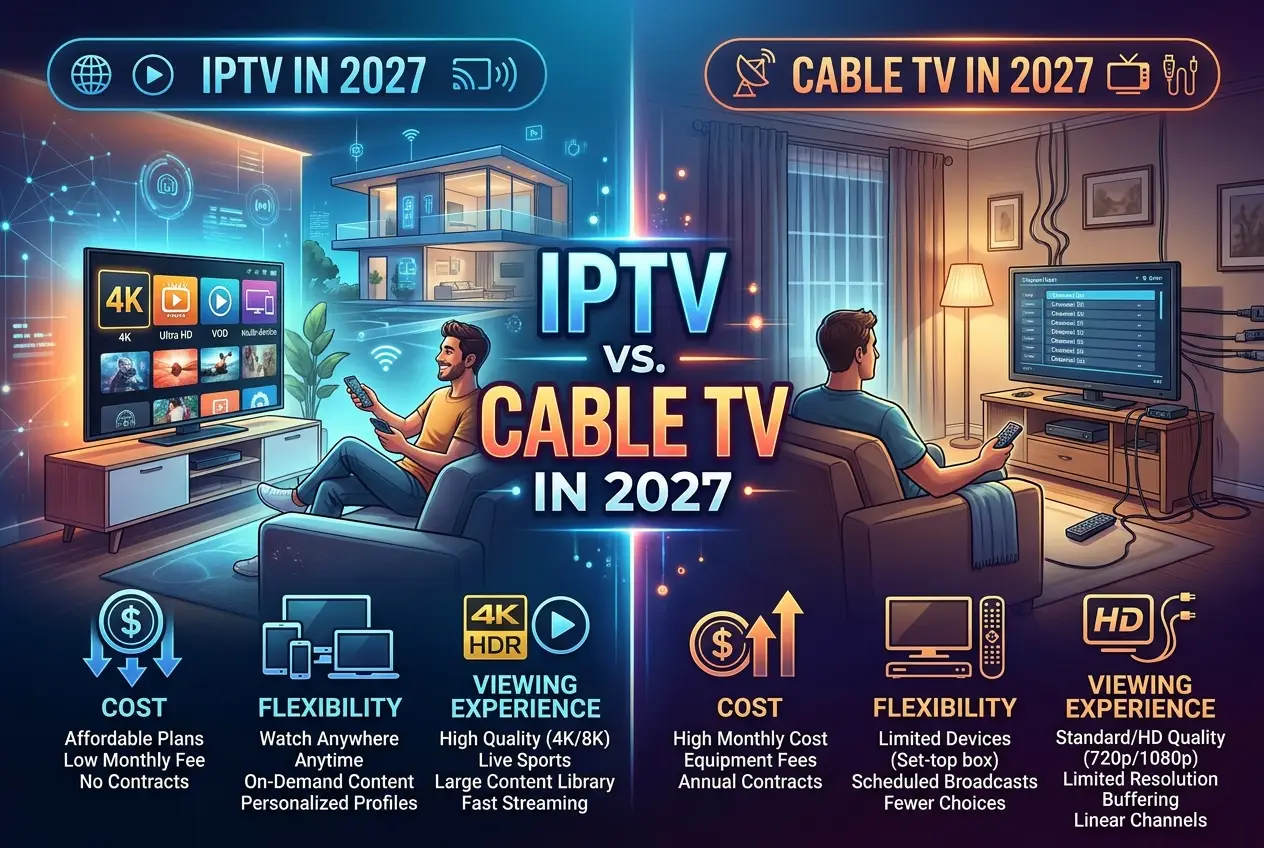 IPTV vs. Cable TV in 2027: Cost, Flexibility, and Viewing Experience
Choosing between IPTV and cable TV in 2027 depends on your budget, viewing habits, internet connection, and preferred television channels. Both options provide access to television content, but they differ in how programmes are delivered, which devices you can use, and what you need to consider before subscribing.
For viewers looking for more flexibility, IPTV may be an option worth exploring. Traditional cable TV, meanwhile, can appeal to households that prefer a provider-managed television service. Understanding the differences can help you decide which solution fits your needs.
1. What Is IPTV?
IPTV stands for Internet Protocol Television. It delivers television programming over internet protocol networks rather than relying exclusively on traditional cable or satellite delivery.
Depending on the provider, IPTV services may include live television, on-demand programming, and other streaming features. Compatible devices may include Smart TVs, Android TV devices, streaming sticks, smartphones, tablets, and computers.
However, IPTV services are not all the same. Their channel selection, streaming quality, device compatibility, and subscription conditions vary.
Before subscribing, verify that the provider has the necessary rights to distribute its advertised content in your location.
2. What Is Cable TV?
Cable TV delivers television programming through a cable television network, typically using a physical connection and compatible receiving equipment.
Traditional cable packages may include live channels, news, sports, entertainment, and local programming, depending on the provider and package.
Some providers also offer on-demand features, recording equipment, and bundled internet services. Availability, pricing, and package options depend on the provider and location.
Cable TV may be suitable for households that prefer a conventional television setup and want their television service managed through one provider.
3. IPTV vs. Cable TV: Main Differences
The following comparison highlights the main factors to consider when choosing between IPTV and traditional cable television.
| Feature | IPTV | Traditional Cable TV |
|---|---|---|
| Delivery method | Internet protocol network | Cable television network |
| Internet requirement | Requires a suitable internet connection | Traditional TV reception generally does not depend on your home broadband |
| Device options | Depends on provider and supported applications | Usually uses a compatible TV receiver or set-top box |
| Viewing flexibility | May support several compatible device types | Often centred on a television and provider equipment |
| Subscription options | Varies by provider | Varies by provider and package |
| Picture quality | Depends on stream quality, connection, and device | Depends on the provider, signal, channel, and equipment |
| Installation | May require an app and internet setup | May require a cable connection and compatible equipment |
| Content availability | Depends on the provider’s authorized content | Depends on the provider’s channel package and location |
One important distinction is that IPTV describes a delivery technology, so some legitimate television services use IP networks even when supplied by a traditional telecommunications company. The comparison above focuses on internet-delivered IPTV services and conventional cable TV.
4. Cost Comparison: Which Option Fits Your Budget?
Cost is often one of the first considerations when comparing IPTV and cable TV. However, the cheapest advertised subscription is not necessarily the most economical choice over time.
IPTV Subscription Costs
Some IPTV services offer monthly or longer-term subscriptions. The total cost depends on the provider, included features, number of permitted connections, and subscription duration.
Before choosing a plan, check:
-
- The full subscription price.
-
- Whether additional connections cost extra.
-
- Whether there are setup or equipment fees.
-
- The renewal and cancellation conditions.
-
- Whether the advertised content is included in the plan.
Remember that internet-delivered television also requires a suitable internet connection, which may be an additional household expense if you do not already have broadband.
Cable TV Costs
Cable television pricing depends on the provider, channel package, equipment, and any bundled services.
Some packages include promotional rates that change after a specified period. Additional receivers, premium channels, installation, or other fees may also affect the total cost.
Before signing up, review the full monthly price, contract duration, equipment charges, and cancellation terms.
How to Compare the Real Cost
To make a fair comparison, calculate the total cost over the same period.
For IPTV, include the subscription, any extra connection charges, and the relevant internet expense.
For cable TV, include the television package, equipment rental, installation charges, and any additional services you need.
This approach gives you a more realistic picture of the cost rather than relying on the advertised starting price alone.
5. Flexibility and Device Compatibility
The devices you use every day can influence which television service is more convenient.
Watching IPTV on Different Devices
Depending on the provider, IPTV may work on compatible Smart TVs, Android TV devices, streaming sticks, smartphones, tablets, and computers.
This can be useful for people who want to watch television in different rooms or use a mobile device when a television is unavailable.
However, installing an application on several devices does not necessarily mean that you can stream on all of them simultaneously. Always check the subscription’s connection limits.
Watching Cable TV
Traditional cable TV typically uses a compatible receiver or set-top box connected to a television. Some providers offer companion applications or additional viewing options, but availability depends on the provider and package.
Cable can be convenient for viewers who prefer a dedicated television setup and do not want to manage multiple streaming applications.
6. Streaming Quality and Reliability
Picture quality depends on several factors, and neither IPTV nor cable TV is automatically better in every situation.
IPTV Streaming Quality
IPTV quality depends on the source video, available resolution, internet connection, device performance, and the provider’s infrastructure.
A stable broadband connection can support smooth HD or 4K streaming when the service and content offer those resolutions. Network congestion or weak Wi-Fi may cause buffering or lower picture quality.
To improve streaming performance, use a reliable internet connection, keep your applications updated, and consider Ethernet for stationary devices when practical.
Cable TV Picture Quality
Cable TV quality depends on the provider’s signal, the channel’s broadcast format, and the receiving equipment.
Because traditional cable television does not generally depend on your home broadband connection for live television reception, household internet congestion may not affect the cable signal in the same way.
However, cable service can still experience signal or equipment problems.
Which Provides Better Quality?
The answer depends on the specific services being compared. Check the actual supported resolutions, service reliability, device requirements, and viewing conditions rather than relying solely on marketing claims.
7. Channel Selection and Content Availability
Your preferred programmes should be a major factor in your decision.
IPTV providers may offer different combinations of live television, on-demand programming, and other content. The selection varies widely, so confirm that the channels and programmes you want are actually included.
Cable providers typically offer predefined channel packages. These may include local channels, news, entertainment, sports, and premium options, depending on your location and subscription.
In either case, check whether the service is authorized to distribute the content you want to watch. A large advertised channel count does not guarantee that every channel is available, reliable, or legally licensed.
8. Installation and Ease of Use
Another difference between IPTV and cable TV is how you set up the service.
Setting Up IPTV
Internet-delivered television may require a compatible device, a suitable application, and an active subscription. Setup instructions vary by provider.
Some services can be configured through an application, while others require additional equipment or account settings.
Before purchasing, verify the official setup instructions and device compatibility.
Setting Up Cable TV
Traditional cable TV may require a cable connection, receiver, and sometimes a technician visit. The installation process depends on the provider and whether the necessary equipment is already available.
Once configured, the service is generally managed through the provider’s receiver and remote control.
The more convenient option depends on whether you prefer app-based streaming or a conventional television setup.
9. IPTV vs. Cable TV: Which Should You Choose in 2027?
There is no single best option for every household. Your decision should reflect your budget, technical setup, viewing habits, and preferred content.
IPTV may suit you if:
-
- You prefer internet-delivered television.
-
- You want to use compatible devices beyond a traditional television.
-
- You already have a reliable broadband connection.
-
- You want to compare different subscription durations and service features.
Cable TV may suit you if:
-
- You prefer a conventional television setup.
-
- Your preferred channels are available through a local cable provider.
-
- You do not want live television reception to depend on your home broadband connection.
-
- You prefer a provider-managed receiver and channel package.
Whichever option you choose, compare the full price, channel availability, service terms, equipment requirements, and customer support before making a commitment.
10. Explore AuraIPTV Subscription Options
If you are considering an internet-delivered television service, you can explore the subscription options available through AuraIPTV.
Visit the AuraIPTV Subscription Plans page to review the offers currently listed.
Before purchasing, check the subscription duration, supported devices, streaming specifications, simultaneous connection limits, and applicable terms. Make sure the service is authorized to distribute the content you want to watch in your location.
Comparing the listed features with your own viewing needs can help you make a more informed decision.
Frequently Asked Questions
Is IPTV better than cable TV?
It depends on your priorities. IPTV may provide more flexibility across compatible devices, while traditional cable can offer a conventional television experience that does not generally rely on home broadband for live reception. Compare the specific services available to you.
Is IPTV cheaper than cable TV?
It can be, but there is no universal answer. Compare the total subscription cost, internet expenses, equipment charges, additional connections, and contract terms before deciding.
Does IPTV require internet access?
Yes. Internet-delivered IPTV requires a suitable network connection. The quality of your experience depends partly on connection stability, available bandwidth, and the service itself.
Can I watch IPTV on a Smart TV?
Many IPTV services support selected Smart TVs or compatible streaming devices. Check the provider’s supported-device list and official application availability before subscribing.
Does cable TV need an internet connection?
Traditional cable television generally does not require home broadband to receive live television. However, some additional features, such as on-demand services or provider applications, may require internet access.
Is IPTV legal?
IPTV is a technology for delivering television over internet protocol networks. Whether a particular service is lawful depends on factors such as its authorization to distribute the content it offers. Check the provider’s credentials before subscribing.
Final Thoughts
When comparing IPTV vs. cable TV in 2027, consider cost, flexibility, viewing quality, channel selection, and the equipment required. IPTV can be attractive to viewers who value internet-based viewing on compatible devices, while traditional cable may appeal to households that prefer a conventional television service.
The best choice is the one that fits your viewing habits, budget, and technical requirements. Review the full terms and verify content authorization before purchasing any subscription.
You can visit the AuraIPTV Subscription Plans page to review the available offers and compare their listed features with your requirements.